

Stories are our Inheritance
By Anh-Mai Kearney Zubia
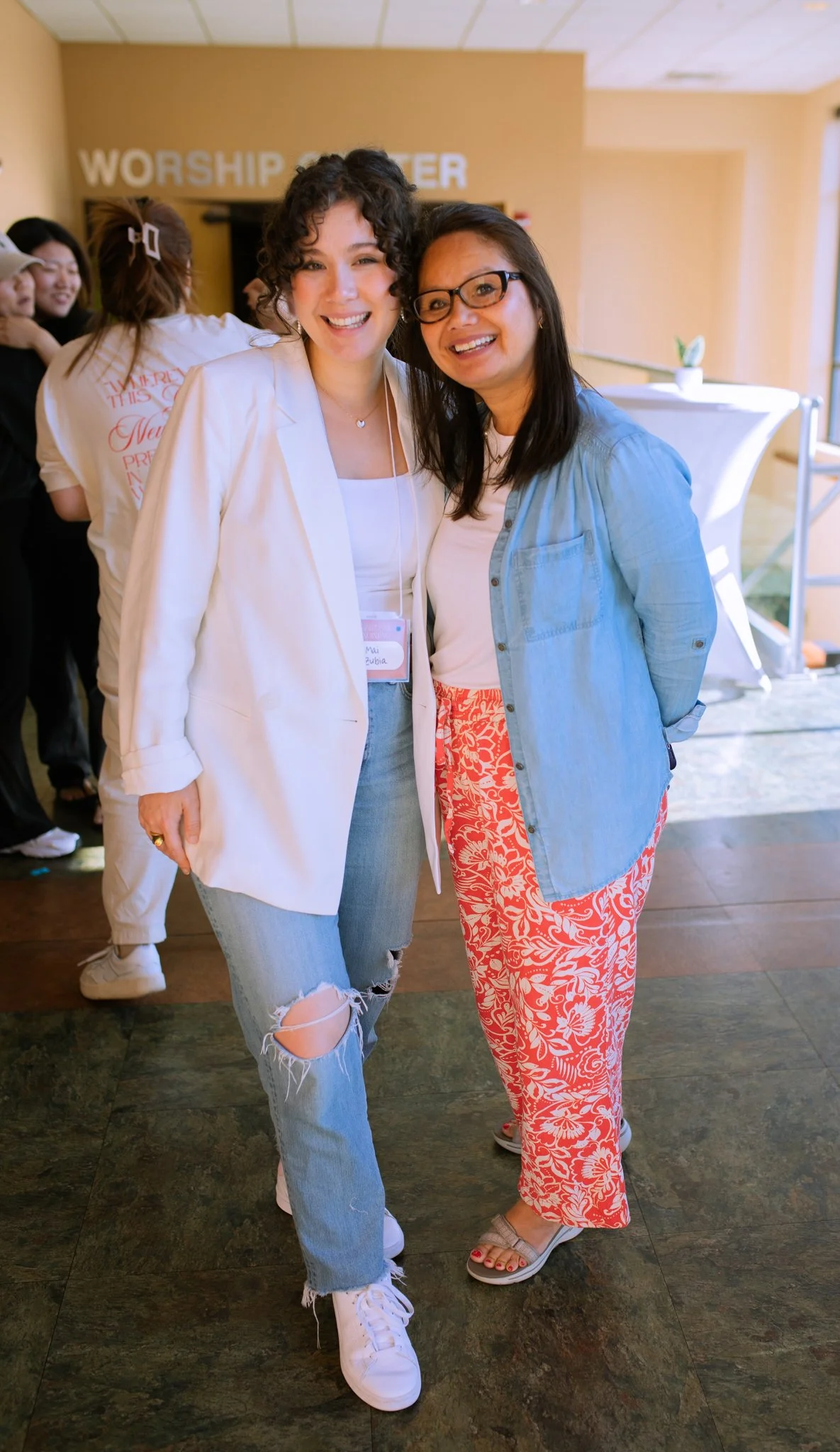
My stories do not begin with “Once upon a time” or “Back when tigers used to smoke.” For me, the stories from my mother’s lips usually begin with the words, “Back at the orphanage.”
We are all made up of stories. Cultural identities, national values, family units, and communities are all shaped by stories. Legacies are made by generations continuing to build upon the stories that have come before them, living by the morals and values those stories teach. Stories shape how we view ourselves, the world around us, and even how we view God. The Old Testament contains ancient stories of heroic, flawed humans marking the places and tales of a move of God, passing it down so the people would remember, just as my grandmother and my mother did for me.
During the throes of wartime in Vietnam, my grandmother, with three children and a newborn, couldn’t find her way out of poverty. Making a desperate decision, she sent my eldest aunt to live with another family and dropped my mother and uncle off at an orphanage.
Then the Lord appeared to her in a dream, she told us. “Go back to the orphanage,” He told my grandmother.
“But Lord,” I imagine her replying. “I’m not allowed to go back.”
Yet, she obeyed.
When she returned, there was a job as an orphanage parent available for her. The Lord had provided a way to be with her children.
As the war drew to an end, a desperate decision was made to flee. In the middle of the night they rounded up all the children onto boats, setting sail for anywhere. “Anywhere would have been safer,” my mother reminds me when I look at her with questioning eyes.
But a fishing boat was not designed to carry the weight of 84 orphans or 109 physical bodies.
The motor broke a day into their trip.
Further and further they drifted out to sea for three days. Higher and higher the water rose. Over and over my uncle recalled shoveling buckets of water overboard.
They prayed to the Lord for help. And when it looked like all hope was lost, a US Navy ship sailed by, turning around to assist the sinking boat.
One by one, they lifted the children out of the sinking ship, and onto the new boat. The Lord had provided a way out of a desperate situation once more.
“I almost missed it,” my mother told me, laughing from her chair at the kitchen table. “I only had one pair of shoes, flip flops that I had lost. I was still on the fishing boat looking for them, and almost missed getting on the other ship. They had to throw me onto the US Navy boat, and I lost my flip flops to the sea anyway.”
Now, my mother owns lots of flip flops. They litter the floor of our mudroom and stack up in the corner beside the backyard door. I feign ignorance when my dad throws the old ones away, even as she peeks under cupboards and shelves for the worn strips of plastic. In those moments I can see her on that boat, her curious, child-like eyes searching for things already lost.
Each time I see a pair of her flip flops, I’m reminded of unlikely miracles. I’m reminded of the resilience of the women who came before me and their reliance on God.
You see, I was raised on the words that evidenced God’s miracles and radical provision. Variations of this same story, often with new point of views, were repeated at milestone birthdays, baby showers, weddings and tea ceremonies, or even over dinner conversation – speaking and shaping the identity of my family and community through reminiscence and remembering. We are people who’ve experienced God’s glory. We are people who are grateful to be alive. We are people who worship because of what God has done for us.
And because of these stories, I accepted Jesus at a young age. I had heard who God was to my family, and I put my faith in Him. After all, why would I not place my hope and trust in such a powerful and loving God who did what I’d been told?
One could read scripture and scoff at how easily the Israelites forgot God’s power and love. Yet, as a child of my own family’s exodus, I heard the story, but perhaps familiarity made way to loss of potency.
Like James 1:23-24 says, “For if anyone is a hearer of the word and not a doer, he is like a man who looks intently at his natural face in the mirror. For he looks at himself and goes away and at once forgets what he was like.”
Throughout my childhood, I would forget--forget the stories, forget myself--allowing half-truths to become my tale.
“Hi, I’m Anh-Mai–like ‘on-my head.’” This is semi-true. It’s pronounced “uhn-my”–a completely different vowel. Dale Carnegie says in How to Win Friends and Influence People, “Remember that a person’s name is to that person the sweetest and most important sound in any language.” Yet, it was easier for my peers to pronounce, thus I began editing the truest part of myself for assimilation.
“What are you?” Curious eyes would ask me.
“I’m half white and half-Vietnamese,” I’d reply.
From these simple statements spoken over me and by me, my own sense of identity was fractured from a young age–as if my personhood could be divided upon, placed into separable boxes. So I began sorting myself out, like one would puzzle pieces–here are my edges, the blue ones, oh, that looks like the flower in the corner–loathe to put the pieces together to form a picture. To me, there was no reality in which all of my pieces could form together into a whole.
I was too white to be Asian–my curly hair and fair, freckled skin outcasting me from my Asian peers, and even my own family at times. But I was also too Asian to be white–I didn’t grow up with the same foods as the other kids at lunches, I felt the pressure of good grades despite the constant struggle to achieve them, and some days I longed for glossy hair and light eyes because I wanted to be looked at the same way my other friends were looked at by boys.
Was there a place that I could belong fully as I was? Likely, not.
So I swapped my God-given identity for a fractured sense of self, attempting to find belonging in choosing good pieces of myself to present without showing up as whole. I had forgotten that the God of miracles and radical provision was also an intentional God that made me with intention. By attempting to find significance in being accepted by the world–a world that didn’t know how to embrace the fullness of the intricacies God created me with--I had forgotten who God was and that my first identity was His beloved child, a daughter of the King.
I, like many, recognized the reality of the God of my ancestors on a practical or intellectual level without understanding what that meant for my faith and my life. It wasn’t until I began to read God’s word for myself, reading the Gospels and the Old Testament, reading the accounts of miracles and provision, that I recognized the echo of that familiar friend that my grandmother knew “back at the orphanage.”
Scripture isn’t just a code of laws or instructions about morality. Scripture is also full of stories and deserve to be read as such. When I read God’s word as a series of stories, I was able to recognize the characteristics of the God I already knew, the characteristics my mother and my grandmother shared of God through their stories. As I read God’s word, my spiritual ancestors like Paul, Luke, Ruth, and Esther were teaching me through their stories, the same way my spiritual ancestors like my grandmother are teaching me now.
And as I came face to face with the character of God and the person of Jesus, He began tearing down the power I had given the half-truths I had built myself around and replaced it with wholeness and understanding of the ways He intentionally created me. He breathed new life into our youthful friendship that I had neglected, and put the fractured pieces of my sense of self into a beautiful whole.
The creativity and sensitivity I had tried to squash became where I shined. The years of being forced into piano lessons paid off when I fell in love with musical theatre in high school. And while I never had considered it to be an option, learning a mixed Chinese-American woman was a lead in a musical on Broadway my senior year of high school (Philipa Soo in Hamilton), sparked my imagination of what I could become and the impact I could make with my journey, identity, and story.
And like my constant struggle to receive those good grades befitting an immigrant’s daughter, I continued defying the expectations of what a typical immigrant daughter should do. I paired my lofty dreams with grit, and majored in Musical Theatre and Vocal Performance in college.
I replaced, “half-white half-Asian,” “pronounced like ‘on-my head,’” with “It’s pronounced ‘uhn-my.’ I’m mixed Vietnamese American.” And now I live in New York City where I teach voice lessons, pursue a career in theatre where I regularly audition for Broadway musicals and tours. It’s a life that requires resilience of rejection, a strong foundation of faith, and wholeness of self. And while the grandmother who crossed oceans, that told me about God’s saving grace, that I love deeply, would rather see me back in Texas with babies in the town where our family settled and lives in peace, I know that risky obedience to God’s call for my life (and yes, paying New York rent is risky) is a theme that has permeated both of our stories.
In the West we are messaged to “leave your mark,” to “live your truth,” “to follow your dreams.” In immigrant families we are called to “break generational curses,” to “provide for your family,” “to be successful.” As a mixed child, both white and Vietnamese, I am familiar with the pull in both directions. Perhaps God crafted my story in mind, how my spiritual ancestor Esther would say, “for such a time as this.” I hope to pass along to my brothers and sisters that neither of these cultural messages are the path to life, but can only offer hollow satisfaction. The way to life is the narrow path of following Jesus wherever He may take us--embracing the legacy of overcoming, forsaking the belonging of the world, and walking in the fullness of who God creates us each to be.
--
As Asian American women of the church, our stories are vital to the lifeblood of the body of Christ. Yet so often we find ourselves forgetting our stories and believing half-truths, convinced that the miracles of God belonged only to our predecessors. I fear how many women like me forget themselves when they forget God--And how much of the body of Christ might forget itself when our stories remain tucked behind our lips.
My stories do not begin with “once upon a time,” or, “back when tigers used to smoke.” But they do end the same way: there is a God of power, love, and intention that has marked you and me with significance.
You have a grand story that is worthy of telling and worth being heard. Deuteronomy 4:9 says,“Only take care, and keep your soul diligently, lest you forget the things that your eyes have seen, and lest they depart from your heart all the days of your life. Make them known to your children and your children’s children.” If we believe, as hundreds of thousands of believers who came before us, that stories matter, how then should we respond?
Perhaps, by continuing to tell them.

Make it stand out
Whatever it is, the way you tell your story online can make all the difference.